
From Rescue to Regeneration: Reimagining Child Care in Kenya
Why We Started: A Vision Born from Compassion
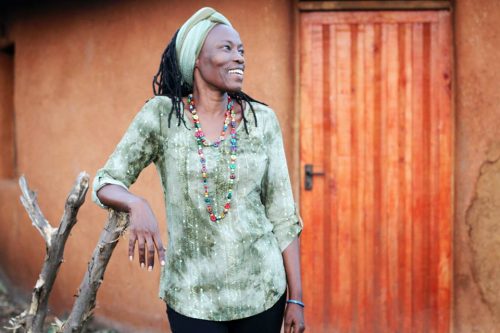
When Kithoka Amani Children's Home (KACH) opened its doors in August 2009, it emerged from a conventional perspective—one rooted in compassion but framed by concepts of rescue and charity. We welcomed ten children from across Meru and Buuri Counties, viewing them through a lens of pity and sympathy as vulnerable children who needed saving from disease, poverty, and violence. I was determined to be their advocate, ready to travel the world sharing their stories to secure funding and resources.
In those early days, I operated from a place of certainty: we were the experts who knew what these children needed. We would provide solutions, create safety, and offer them as normal a childhood as possible. What I didn't recognize then was a critical oversight—no one had asked the children themselves about this transition. While ten families felt relief at burdens lifted, ten quiet, apprehensive children arrived at what would become their permanent home, their voices unheard in decisions that would shape their lives.
The Turning Point: Questioning Our Foundations
Seven years into our work, a workshop titled "The Power of Place" catalyzed a fundamental shift in my thinking. For the first time, I deeply examined not just what we were doing, but why and how we were doing it. The community had donated us a piece of rocky wasteland, and as I considered how to transform this barren land into a productive food forest, a profound realization emerged: I had been viewing both the land and the children as "wastelands" requiring expert intervention to become whole.
This recognition forced me to confront uncomfortable truths about my approach. I had been operating from what I came to understand as a colonized mindset—one shaped by Western development paradigms that positioned me as the expert with superior knowledge of what others needed. Despite being Kenyan, I wasn't thinking or acting from an African worldview. I was perpetuating systems that, however well-intentioned, stripped children of their agency and voice.
The traditional development model I had learned prescribed a clear path: assess the situation, identify problems, design solutions, and implement strategic plans. When working with children, this approach seemed even more justified—after all, don't adults know better? But I began to see how this framework transforms people into helpless victims requiring salvation, creating dependency rather than empowerment. By thinking for the children, deciding for them, and positioning myself as their savior, I was inadvertently erasing their capacity to shape their own lives.
This awakening led me on a journey of decolonizing my worldview and developing a regenerative approach centered on one crucial insight: I didn't want to be the children's savior. I wanted them to discover they possessed everything necessary to transform their own lives—to recognize their inherent "ability to respond" to their circumstances.
The shift required me to first transform myself. I had to relinquish the assumption that I understood the children's circumstances better than they did. I needed to listen more deeply—to my own intentions, to the children's voices, and to what wanted to emerge from our community.
This internal work gave birth to the RECLAIM framework—an acronym embodying values that help both caregivers and children reclaim their voice and agency.
Our Approach: The RECLAIM Framework
R - Responsibility: Recognizing our inherent ability to respond to life. Moving from complaint to action, from blame to ownership. Creating awareness and choosing to engage with challenges rather than avoiding them.
E - Empoweredness: Understanding that while empowerment is what others offer, empoweredness is what we choose to do with that gift. Transforming challenges into opportunities for growth and choosing gratitude for what is present in our lives right now.
C - Courage: Moving beyond fear to listen to our inner voice amid the noise of external expectations. Finding the courage to sit with ambiguity and acknowledge how little we truly know, embracing humility in the face of life's mysteries.
L - Love and Light: Recognizing the divine support of God within ourselves. Understanding that when we learn to love ourselves and shine our own light, we can authentically extend that love and light to others.
A - Adjustiveness: Learning to dance with life like a river navigating obstacles—not demanding they move, but finding creative ways around and through. Choosing our battles wisely and building relationships rooted in Ubuntu: "I am because you are."
I - Intuition: Honoring divine wisdom that balances logic with spiritual knowing. Drawing from the place of "not knowing" while trusting that all is well and all is provided—a foundation of faith.
M - Mindfulness: Cultivating the power of silence and presence. Being grateful for what we've been gifted and choosing to build upon it. Quieting the mind to hear the still, small voice within and reconnecting mind, heart, and soul.
From Prescription to Pattern: Curating Conditions for Growth
Our regenerative approach fundamentally differs from traditional institutional care by shifting from prescription to pattern-thinking. Rather than implementing standardized solutions, we work with patterns that enable regenerative outcomes while allowing infinite local expressions.
Think of it as gardening versus manufacturing. Manufacturing involves specifying exactly what you want and imposing processes to create predetermined results. Gardening, by contrast, means preparing soil, providing water, selecting compatible plants, and understanding conditions that favor growth—then allowing the garden to evolve through its own intelligence as plants find light, roots negotiate space, and ecosystems self-organize. At KACH, this means we curate conditions rather than control outcomes. We ask fundamentally different questions:
What capacities need to exist in each child, rather than what activities should we prescribe?
What relationships enable learning without homogenizing individual experiences?
What rhythms of gathering, reflection, and action support each child's unique emergence?
When should we provide structure, and when should we step back?
We've shifted our language from problem-focused and fear-based to language that recognizes potential and inherent goodness in each person and place. We view KACH as a living system rather than a machine—a place that learns and adapts through the intelligence of all its parts.
The Impact: From Victims to Agents of Their Own Stories
This transformation hasn't happened overnight. It has required prayers, workshops, counseling, motivation speakers, and most critically, genuine love from those who care for the children. But the impact has been profound.
The children at KACH are learning to see themselves not as victims defined by what has been done to them or what they lack, but as individuals with agency who can shape their own narratives. They are discovering their ability to respond to life's circumstances—to regenerate, not merely sustain, their lives.
Where traditional approaches create dependency, our regenerative model cultivates self-authorship. The children are learning to name themselves rather than accepting the labels others place on them simply because they are orphans. They are developing the seven capacities of RECLAIM, building internal resources that will serve them throughout their lives.
For me as a founder and caregiver, this approach has transformed my role from expert prescriber to steward of possibility. I am no longer an architect of certainty but someone who tends the conditions that allow each child's unique potential to unfold. I've learned that true regeneration begins with recognizing that we all—children, caregivers, and community members alike—have our own "wastelands" that we're called to transform into life-giving spaces.
Looking Forward: A New Model for Child Care
The journey from a rescue mentality to a regenerative approach represents more than a shift in methodology—it embodies a fundamental reimagining of what children's homes can be. Rather than institutions that do things for children, we aspire to be communities that create conditions for children to discover and develop their own capacities.
This work has taught me that sustainability asks the wrong question. The real question isn't "What are we sustaining?" but "What conditions enable continuous regeneration and flourishing?" When we release the need to be saviors and instead become co-creators with the children in shaping their futures, we unlock possibilities that no strategic plan could have prescribed.
The children of KACH are not projects to be completed or problems to be solved. They are whole human beings with innate wisdom, resilience, and potential. Our role is simply to work with them to remember this truth and to create the space for that remembering to flourish into lived reality.
At Kithoka Amani Children's Home (KACH), we continue learning and evolving in our regenerative approach to child care. We invite others in the field to join us in questioning inherited assumptions and reimagining what's possible when we trust in children's inherent capacity to author their own becoming.

Comments